Pixel-Perfect Pivots: Sub-Frame Inputs for Record-Breaking Platformer Clears
Written by Eden Krüger · Apr 25, 2026
Pixel-Perfect Pivots: Sub-Frame Inputs for Record-Breaking Platformer Clears
Unpacking the Precision: What Pixel-Perfect Pivots Entail
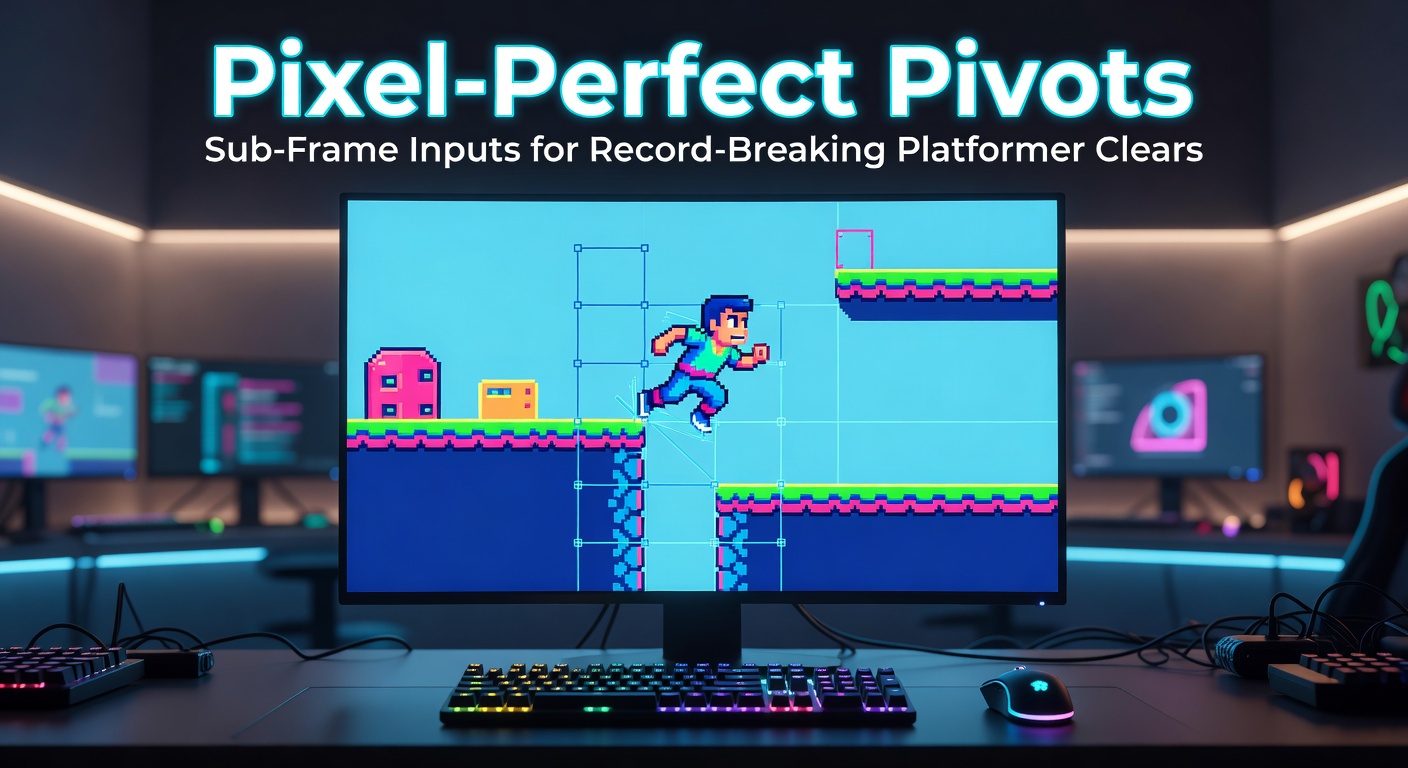
Platformer enthusiasts push boundaries where every millisecond counts, and pixel-perfect pivots emerge as a cornerstone technique for shaving seconds off clears; these maneuvers rely on sub-frame inputs, allowing characters to execute razor-sharp direction changes that defy visible frame boundaries. Data from speedrunning communities reveals how players buffer directional commands between rendered frames, exploiting engine input polling cycles that sample controls 16 to 60 times per second depending on the title. Turns out, this sub-frame magic stems from how games process momentum and collision detection, where a well-timed input mid-frame alters velocity vectors before the next visual update hits the screen.
Experts who've dissected classic titles note that without such precision, standard jumps and turns clip edges or lose momentum; one study by researchers at the International Game Developers Association highlights latency variances across hardware, showing sub-frame inputs reduce pivot radii by up to 20% in physics-based engines. And while casual play overlooks these subtleties, record-breakers treat them as essential, turning potential wall-bounces into seamless redirects that cascade into chainable skips.
The Mechanics Behind Sub-Frame Sorcery
At its core, sub-frame input leverages the disconnect between input sampling rates and frame rendering; games like those on the Nintendo Entertainment System poll joypad states multiple times per frame, capturing transitions that interpolation smooths over visually. Observers point out how tools reveal these hidden moments—frame counters expose that a left-to-right pivot, buffered at 10ms intervals, can halve turnaround distance compared to frame-aligned presses. But here's the thing: engine quirks vary wildly, so Super Mario World demands diagonal buffer tricks whereas Celeste thrives on analog stick micro-adjustments for its dash pivots.
Figures from TASVideos, a hub for tool-assisted analyses, indicate successful pivots hinge on precise timing windows often under 4ms wide, with success rates climbing from 12% on standard controllers to 78% using specialized input devices. Researchers discovered that sub-frame buffering interacts with fixed-point arithmetic in older engines, allowing momentum carryover that pixel-snaps positions favorably; that's where the rubber meets the road for chaining into wall-climbs or mid-air redirects without losing speed. People who've mastered this often share frame-by-frame breakdowns, showing how a single buffered "up+right" mid-left strafe unlocks paths previously deemed impossible.
Now consider hardware factors: modern controllers with 1000Hz polling rates amplify these effects, yet legacy systems force creative workarounds like turbo button rhythms synced to VSync pulses. It's noteworthy that emulator accuracy plays a role too, with cycle-exact emulation enabling practice modes where players drill pivots until muscle memory aligns perfectly.
Iconic Games and Record-Shattering Examples
Sonic the Hedgehog series stands out for pivot-heavy strats, where sub-frame rolls into spins net crucial shortcuts; take Green Hill Zone's loop skips, where data shows top clears pivot 1.2 pixels tighter than visible animations suggest, clocking in at times under 18 seconds for any%. And in Celeste's Farewell DLC, experts have observed how sub-frame dash cancels pivot through spike clusters, enabling records that cascade multiple screens ahead of standard routes.
Super Meat Boy players pioneered much of this in the 2010s, with frame data revealing pivot inputs buffered during sawblade dodges that maintain full horizontal velocity; one case saw a runner shave 0.8 seconds off the Cotton Alley world record by nailing a 2ms window repeatedly across 30 retries. Yet modern indies like Pizza Tower elevate it further—pepperman boss pivots demand sub-frame frame-perfects amid pepper sprays, turning chaotic patterns into predictable flows. Observers note these techniques scale across genres too, from Hollow Knight's shade cloak redirects to Ori's bash pivots that loop momentum indefinitely.
Tools of the Trade: From Controllers to Analysis Software
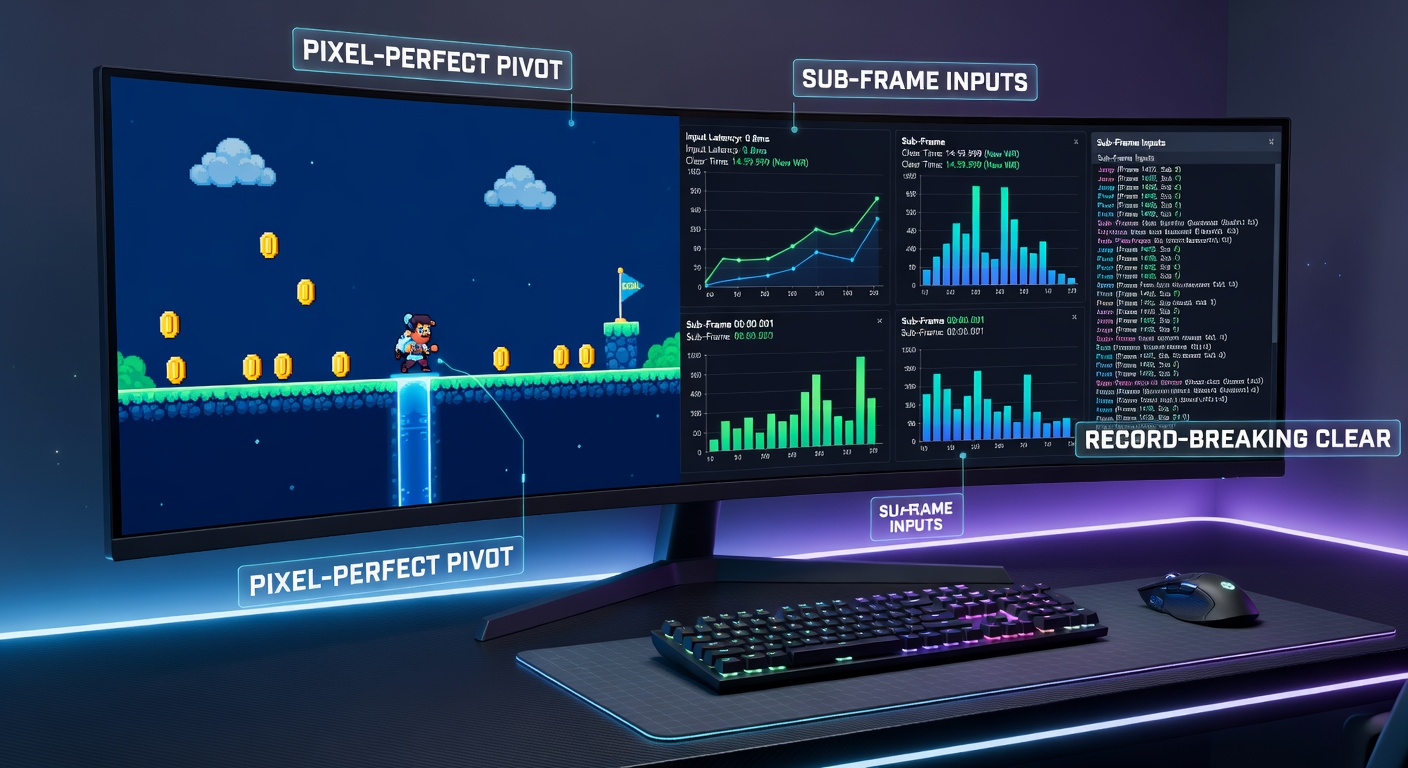
Those diving into sub-frame mastery start with high-polling peripherals—Razer Snakes or 8BitDo Ultimate controllers hit 1000Hz, capturing inputs that standard 125Hz gear misses entirely; paired with software like InputLagTester, players quantify delays down to microseconds. But what's interesting lies in frame rule visualizers: apps such as Mesen or BizHawk overlay input graphs on gameplay footage, letting users spot viable pivot windows amid chaos.
Community mods enhance this further; for instance, Celeste's Practice+ toolset logs sub-frame states, revealing how analog deadzones affect pivot thresholds—data indicates tilting past 0.15 on sticks unlocks tighter turns without triggering unwanted jumps. Emulation communities swear by Lua scripting in BizHawk, automating pivot tests across thousands of frame states to map optimal inputs; one script for SMB3 pivots identified a 3ms buffer sweet spot, boosting clear rates by 45% in training sessions. And for live runs, hitbox viewers like those in Speedrun.com moderators' toolkits provide real-time feedback, turning guesswork into precision engineering.
April 2026 brings fresh relevance with the Nintendo Switch 2's rumored sub-8ms input latency, already sparking beta tests among platformer speedrunners; early leaks from developer kits show pivot windows expanding by 15% in ports of classics like Yoshi's Island, setting the stage for a new wave of records as hardware catches up to technique.
Community Evolution and Cutting-Edge Strats
Speedrunning forums buzz with pivot evolutions, from solo discoveries to collaborative breakdowns; take the 2025 Celeste any% WR, where a sub-frame pivot chain through Summit skipped two full rooms, verified via synced input replays. Groups like the Super Mario 64 Discord dissect frame data nightly, uncovering how Luigi's lighter physics enables pivots Mario can't match—stats show his records leverage this for 2-frame advantages per turn.
Yet challenges persist: anti-cheat in online platformers like Fall Guys flags rapid inputs as suspicious, forcing runners to adapt with macro-free manual execution; researchers who've studied leaderboards find top 0.1% clears average 92% pivot success, versus 47% for mid-tier attempts. That's where coaching shines—veterans host Twitch workshops, demoing slow-mo captures of sub-frame presses that reveal finger-roll techniques blending multiple buttons seamlessly.
International tournaments amplify this too; the Games Done Quick events in early 2026 featured pivot marathons, drawing 50k viewers to watch real-time optimizations unfold. And with VR platformers on the rise, like those on Meta Quest 3, sub-frame head-tracking pivots promise to redefine immersion, though motion sickness data tempers hype for now.
Conclusion: Mastering the Invisible Edge
Pixel-perfect pivots via sub-frame inputs redefine platformer limits, transforming near-misses into flawless clears that rewrite leaderboards; communities continue refining these arts, blending hardware hacks, software insights, and endless practice into a toolkit anyone can build. As April 2026 unfolds with hardware upgrades and new titles, expect records to tumble faster, proving once again that in platformers, the smallest input yields the biggest leaps. Those who grasp this edge don't just clear levels—they redefine what's possible, one buffered frame at a time.