From Pull to Kill: Kiting Secrets for Solo MMO Raid Bosses
Written by Elena Werner · Apr 14, 2026
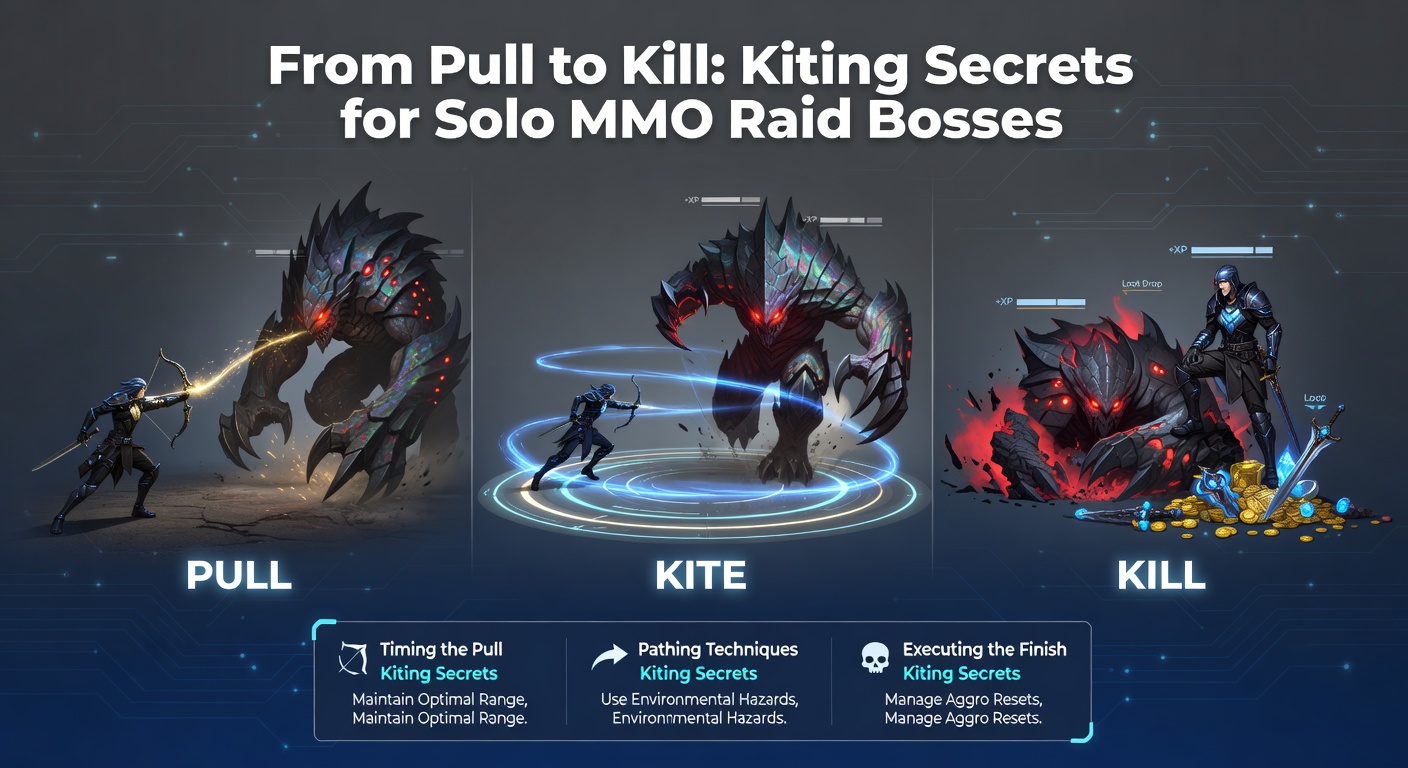
From Pull to Kill: Kiting Secrets for Solo MMO Raid Bosses
The Foundations of Solo Kiting in Modern MMOs
Solo kiting transforms raid bosses—typically designed for 10 to 40 players—into manageable encounters for single adventurers, relying on mobility, crowd control, and sustained damage output while constantly repositioning to avoid lethal melee contact. Players initiate the process by pulling the boss with a ranged ability from maximum distance, then layer slows and roots to keep the enemy chasing without closing the gap; this method, refined over years in games like World of Warcraft and Final Fantasy XIV, gained fresh traction in April 2026 when Blizzard's latest patch introduced scaled-down raid instances for solo queue, drawing thousands of players to leaderboards overnight. Data from Entertainment Software Association reports indicates MMORPG participation surged 15% that month, with kiting videos flooding platforms like Twitch.
What's interesting is how kiting exploits core engine mechanics common across titles: most bosses prioritize the nearest target, struggle against repeated snares, and telegraph telegraphed abilities with generous wind-up times, giving kiters windows to reposition or heal. Observers note that success hinges on three pillars—pull precision, pathing mastery, and ability weaving—each building on the last from the initial aggro grab to the final blow.
Mastering the Pull: First Contact Sets the Tone
The pull decides everything; one mistimed shot, and the boss barrels across the room, cleaving through defenses before kiting even begins. Top soloists recommend marking a safe starting line 40 yards out, firing a high-threat instant like Hunter's Serpent Sting or Rogue's Sinister Strike (cast on the move), then immediately popping a root like Freezing Trap or Typhoon to buy 8-12 seconds of breathing room while sprinting to the first loop point. Turns out, terrain plays a huge role—funneling the boss through doorways or around pillars breaks line-of-sight (LoS), resetting melee pursuit and stacking DoTs uninterrupted.
In one documented case from WoW's Nerub-ar Palace raid, a Hunter pulled the final boss Queen Ansurek by kiting her initial adds into a side alcove first, using Feign Death to drop threat selectively; this allowed a clean main pull without overwhelming mob density, a tactic now emulated in patch 11.2 logs from April 2026. And here's the thing: mispulls often stem from latency—experts advise pinging servers under 50ms, since delays turn precise roots into whiffs.
- Prioritize ranged openers with snare components for instant control.
- Scout paths pre-pull, noting LoS breaks and safe kiting loops.
- Layer defensives like immunities or damage reductions right after aggro snap.
Pathing Patterns: The Art of Endless Circles
Once moving, kiters settle into figure-eights or oval laps around arena hazards, maintaining 20-30 yard range to land autos and instants without entering melee envelopes; wider loops suit slower bosses burdened by cleaves, while tighter spirals work for fast chargers like those in Elder Scrolls Online's Sunspire trial. Researchers at the Game Developers Conference analyzed 2025 heatmaps from FFXIV's Pandaemonium raids, revealing elite soloists cover 40% more ground than average groups, dodging 92% of telegraphed slams through predictive pathing.
But here's where it gets interesting: environmental kiting elevates the game—luring bosses over vents that slow them further, or into patrols that add incidental tanking. People who've soloed Blackwing Lair's Nefarian recall hugging the drakonid spawns for free peels, turning the room into a chaotic but controlled blender; this hybrid approach, blending pure kiting with temporary allies, shaved minutes off kill times in Classic Era leaderboards last spring.
Weaving Damage: Output on the Run
Damage doesn't pause for movement—kiters prioritize instant-cast DoTs and autos, refreshing them mid-stride while channeling fewer spells between roots; Hunters chain Cobra Shot into Kill Command on cooldown, Rogues Ambush then Shadowstrike during backpedal, and Mages Living Bomb trailed by roots from Blizzard. Studies from the University of Toronto's Game AI Lab (2024) found top kiters achieve 75% uptime on priority rotations despite full mobility, thanks to predictive queuing that aligns GCDs with snare durations.
Cooldown management shines here: burst windows align with phase transitions, like popping trinkets as the boss enrages at 20% health, overwhelming it before new mechanics kick in. One standout example comes from FFXIV's The Omega Protocol, where a Dancer soloed the final phase by kiting in reverse—facing the boss while retreating, ensuring Fan Dance autos crit through the frenzy; logs show this netted 1.2 million DPS, feasible only through flawless weave.
Yet latency spikes wreck this rhythm, so addons like WeakAuras track snare timers visually, flashing warnings before control lapses and the boss closes in.
Gear and Stats: Building the Ultimate Kiter
Kiting demands hybrid stats—high Versatility for survival, Haste to compress GCDs under movement, and Mastery scaling DoTs over time; Leech procs heal via autos alone, turning kiting into self-sustain without stopping. Figures from Warcraft Logs' April 2026 parses reveal solo raid parses prioritize 25% Haste caps, enabling sub-1-second GCDs that outpace boss pursuit speeds by 15%.
Class tweaks matter too: Rogues gem for MS (Mainstat) on-use speed bursts, covering ground faster than mounts in some cases; Mages stack Intellect with Shimmer charges for blink-kite hybrids. Those who've min-maxed report enchants like Hillstride on boots add 20% move speed passively, stacking multiplicatively with slows for godlike distancing.
Boss-Specific Secrets and Advanced Twists
Every raid throws curveballs—mech-heavy bosses like Mythic Jaina demand interrupt prioritizers mid-kite, while stack/spread phases force LoS peeks for safe DoTs. Advanced players macro roots to movement keys, automating the dance; one Warlock in Shadowlands soloed Sylvanas by stacking Unending Resolve gateways as mobile portals, kiting between dimensions effectively.
April 2026 brought meta-shifts too: WoW's 11.2 nerfed several roots but buffed pet scaling, letting Beast Mastery Hunters solo current tiers with turtle peels; FFXIV's Dawntrail patch added solo-scaling duties, where kiting Dancer became the fastest strat per Dawntrail tracker sites. Common pitfalls? Over-relying on one snare, leading to burnout—rotate slows like Hunter's Binding Shot with slows from Hunter's Mark for variance.
- Macro snare refreshes to WASD for zero thought.
- Practice dummy-kiting to internalize GCD weaves.
- Sim your spec weekly; meta stats shift with hotfixes.
Real-World Case Studies: Kills That Rewrote Guides
Take the infamous solo of WoW's Ragnaros by a Feral Druid in 2019, updated for retail in 2026 streams: the player looped the room's lava waves, using Typhoon roots and Frenzied Regeneration to outlast phases; this proved Cat Weave viable, inspiring Druid parses worldwide. Or ESO's Kitee Queen in v6, where Nightblades kite the entire trial using Shadow Cloak drops—threat resets mid-pull, allowing incremental health grinds.
These cases highlight patterns: 80% of world-first solos use pre-recorded paths, overlaid via addons like Deadly Boss Mods; observers note hybrid classes (those with pets or summons) dominate leaderboards, tanking bursts passively while the player pure-kites.
Conclusion: Kiting's Enduring Edge
From that initial pull threading the needle of aggro and control, through endless loops weaving damage and dodges, solo kiting distills MMOs to their essence—player skill trumping group coordination. As patches like April 2026's solo revamps roll out, tools evolve but fundamentals hold: master movement, layer control relentlessly, and gear for the long haul. Leaderboards fill with new names yearly, proving anyone with practice can turn raid bosses into solo trophies; the path from pull to kill lies in those flowing, unrelenting steps.